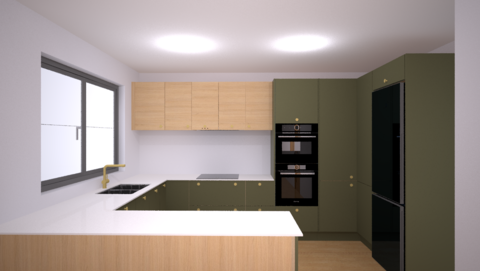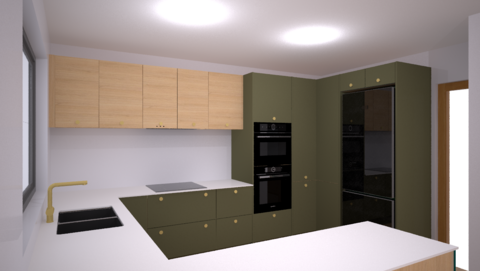

Melamine Faced Chipboard (MFC)
A Practical, Proven Material for Modern Cabinetry
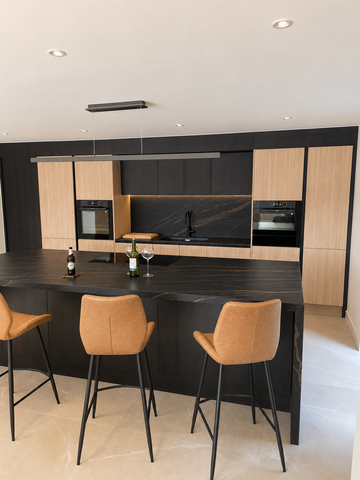
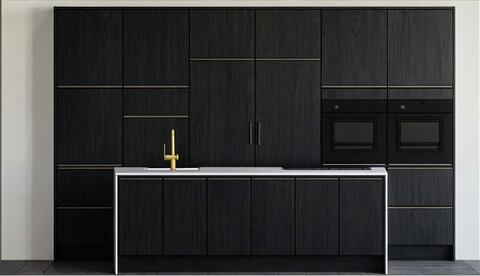
MFC is one of the most widely used cabinetry materials in modern kitchens. It's used for cabinets, doors, and panels.
At its simplest, it consists of an engineered particleboard core faced with a durable decorative melamine surface, creating a finished panel that is practical, versatile, and cost-effective.
Because MFC is so common, it is often dismissed as a purely budget material. The reality is more nuanced.
Quality varies significantly depending on the board specification, recycled content, density, emissions profile, moisture resistance, and manufacturing standards.
At Sustique, we believe materials should be judged by performance and specification, not assumptions. We opt for 18mm MFC manufactured by Egger in the UK.
What Makes MFC Popular in Kitchen Cabinetry?
Kitchen cabinetry demands materials that are stable, practical, durable, and visually versatile.
MFC performs well in many of these areas, which is why it remains a mainstream cabinetry material across much of the industry.
Key advantages include:
- dimensional stability
- consistent manufactured quality
- durable decorative finishes
- broad colour and texture options
- efficient production
- cost-effective scalability
For many projects, it offers a practical and reliable cabinetry solution.
Surface Durability and Practicality
The melamine surface gives MFC much of its appeal.
This factory-applied decorative finish provides:
- resistance to everyday wear
- scratch resistance
- easy cleaning
- stain resistance
- consistent colour and finish
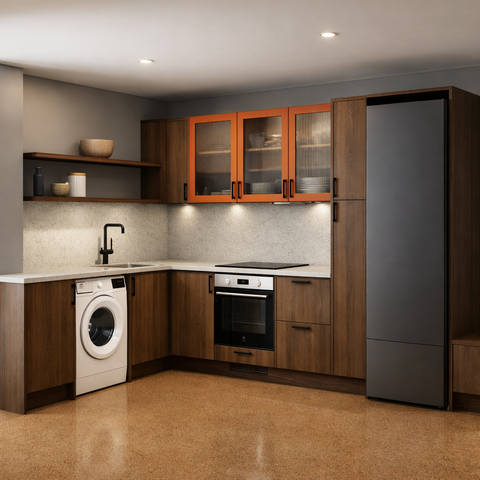
This makes MFC particularly practical for busy family kitchens, utility rooms, and projects where easy maintenance matters.
Unlike painted finishes, the surface does not require ongoing refinishing.
Dimensional Stability
Because MFC is engineered rather than naturally grown, it offers predictable consistency.
It does not suffer from natural grain movement in the way solid timber can, helping maintain alignment and structural consistency.
This makes it well-suited to cabinet carcasses, shelving, and structural cabinetry components.
Stable cabinetry helps ensure:
- smooth drawer operation
- accurate door alignment
- consistent support for worktops
- reliable long-term performance
Sustainability Considerations
This is where specification matters enormously.
Some MFC products have poor environmental credentials.
Others perform surprisingly well.
High-quality MFC will include:
- significant recycled wood content
- responsibly sourced timber inputs
- low-emission resin systems
- independent emissions certification
For example, some modern MFC boards contain substantial recycled content while remaining almost fully recyclable at end of life.
At Sustique, we prioritise responsibly specified low-emission board products. It's why we specify Egger MFC.
MFC vs MDF
These materials are often confused, but they behave differently.
Compared with MDF, MFC offers:
- better structural rigidity in carcass applications
- improved screw-holding in many cabinetry uses
- lower weight
- better dimensional stability
- lower material density
MDF offers a smoother machined surface, making it useful for painted decorative components.
However, it does have limitations.
MDF is manufactured from fine wood fibres bonded with resin systems, which have historically included formaldehyde-based binders. While modern low-emission MDF products are available and emissions standards have improved significantly, not all MDF products perform equally.
This means specification matters.
Compared with well-specified low-emission alternatives, poorly specified MDF can contribute more to indoor VOC emissions, particularly in enclosed interior environments.
MDF is also denser, heavier, and generally less tolerant of moisture exposure, with swelling and edge damage being common failure points when water ingress occurs.
For these reasons, Sustique excludes products and materials that include MDF.
MFC vs OSB
Both are engineered wood products, but they serve slightly different roles.
Compared with OSB, MFC offers:
- a fully finished decorative surface
- wider colour and finish choices
- a cleaner visual appearance for exposed interiors
- simpler production efficiency
OSB generally offers:
- greater structural strength
- stronger screw-holding performance
- improved structural rigidity
- better performance in demanding load-bearing applications
The right choice depends on intended use.
MFC vs Plywood
Plywood is often perceived as the superior material, but this is misleading.
Compared with plywood, MFC can offer:
- greater finish consistency
- lower cost
- easier specification at scale
- broad decorative flexibility
- predictable manufactured uniformity
High-quality plywood remains an excellent premium structural material.
But quality varies widely, and lower-grade ply can suffer from voids, inconsistent veneers, and manufacturing variability.
Material choice should be based on application, not perception.
Moisture Resistance
Standard MFC should not be regarded as waterproof.
Like most engineered wood materials, prolonged water exposure will cause damage.
However, moisture-resistant grades exist and significantly improve performance.
Good kitchen design also matters:
- quality edging
- correct sealing
- sensible installation
- prompt attention to leaks
Many cabinetry failures are caused by poor maintenance or water ingress, not the board material itself.
The Sustique View
MFC is not automatically a “cheap” material.
Well-specified low-emission MFC can provide a practical, durable, visually versatile, and environmentally responsible cabinetry solution. It's why it is the material we use for the Engineered range.
It may not offer the circular repairability or structural innovation of systems like SmartFrametm, but for many projects it delivers strong performance and excellent value.
As always, purpose and specification matter.