Reflecting The Homeowner Sustainability Values
When this Edinburgh homeowner decided it was time to replace their ageing kitchen, sustainability was a priority consideration. Looking for a more sustainable alternative to a conventional mainstream kitchen, they chose Sustique and the innovative Puustelli Miinus kitchen system. The result is a bright, modern kitchen that uses less material, is ultra-low VOC and reflects the homeowner's values.
Design Brief
While the existing layout remained practical, there was little scope to alter the position of the sink, appliances or window. The kitchen itself no longer reflected the homeowner's aspirations for their home, and was clearly reaching the end of its life. Rather than choosing a conventional replacement kitchen, the homeowner actively sought a more sustainable alternative that would reduce environmental impact without compromising on quality, durability or everyday practicality.
Why Puustelli Miinus?
After researching sustainable kitchen solutions, they chose Puustelli Miinus supplied by Sustique. Developed to use significantly less material than conventional kitchen cabinetry, Miinus combines long-life construction, ultra-low VOC materials and a circular design philosophy.
The transformation from tired and dated to bright and modern is captured in the short project reel we've created.
Before the Transformation
The existing kitchen was still functioning for the homeowner, but it was beginning to show its age. Essentially, the homeowner was living with it, but wasn't loving it. With a limited life horizon, the time to replace it was approaching. We would estimate it was 20-25 years old, which is commendable for a conventional mainstream kitchen. Judge for yourself from the following images.


The Transformation
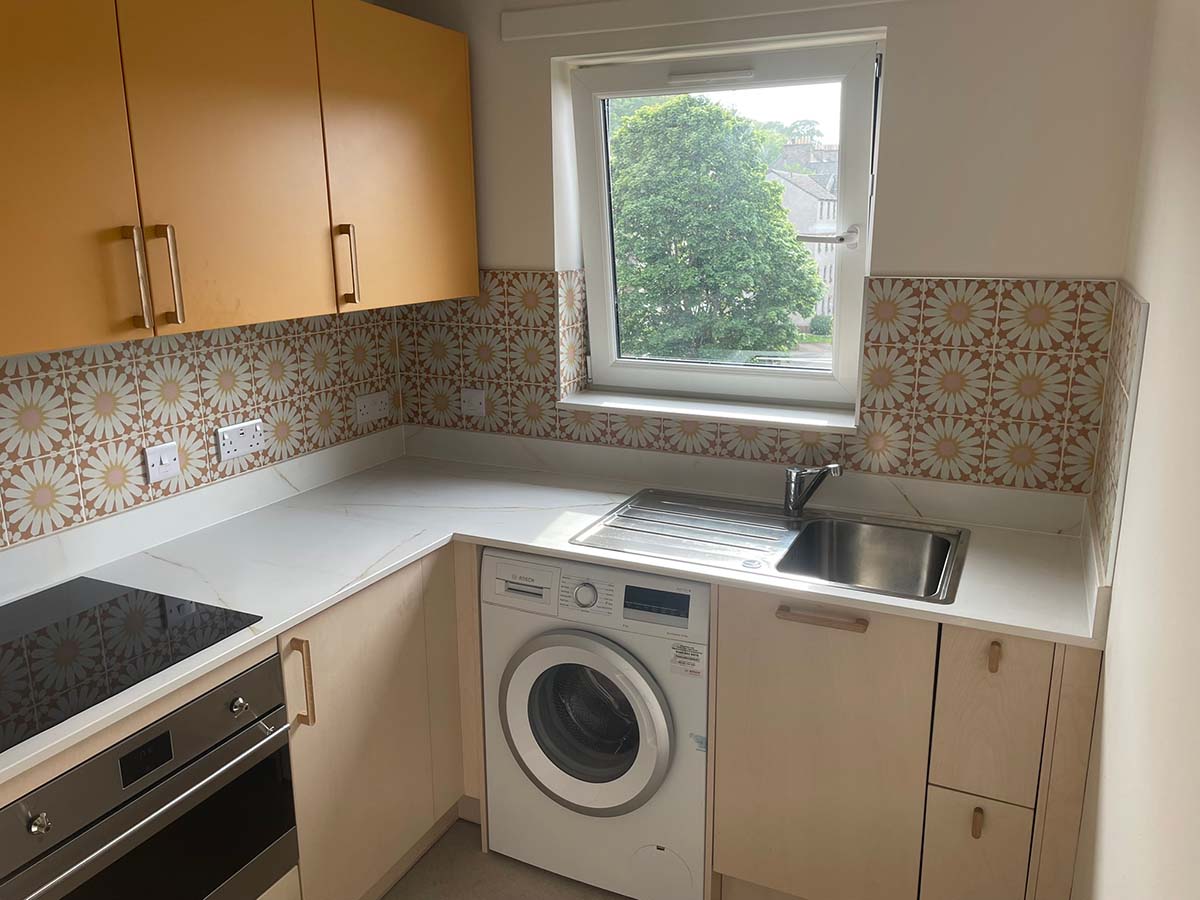
At the heart of this kitchen transformation is the Puustelli Miinus cabinetry system, which includes the Smartframetm carcasses. But a truly sustainable kitchen is about all the parts, not a single part. This transformation includes the choice of worktop, appliances, sink, tap, flooring, tiling, and paint.
The result is a modern light kitchen that fully aligns with the homeowners' sustainability values, while doing a few clever things to declutter work surfaces, support recycling, and maximise what was previously dead space.
Exploring The Transformation - Cabinetry
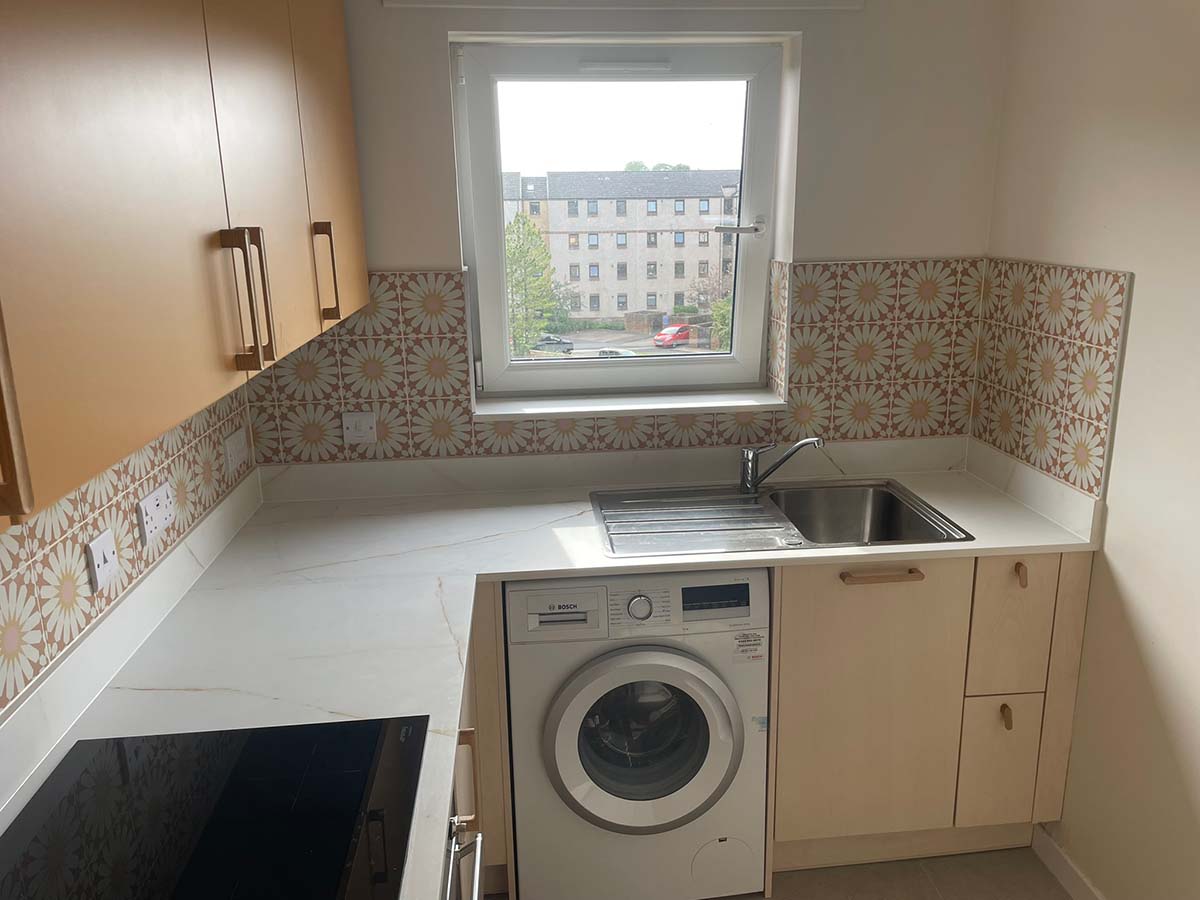
On the surface the layout has not changed, but there is material change, beyond the aesthetics. There are no longer any base cupboards. It's now drawers of one type or another. Some obvious, some less obvious. Drawers are functionally superior to cupboards. Everything becomes accessible. This includes the corner unit with two pull-out shelves. This unit also recovers what was previously dead corner space.
The dated sink unit is replaced with pull-out bins. The open shelves to the right of the sink have been replaced with two drawers
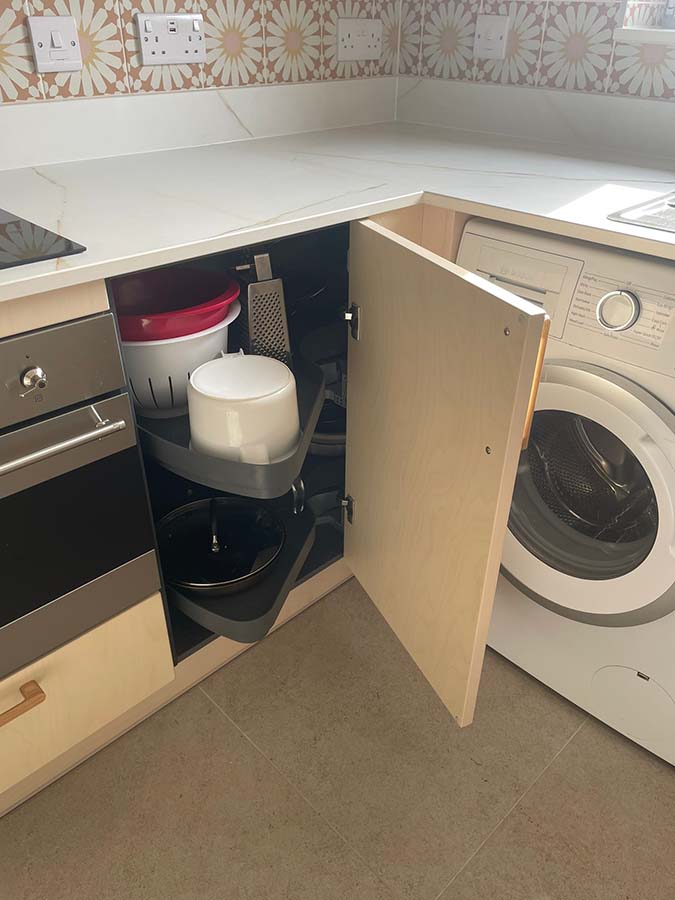
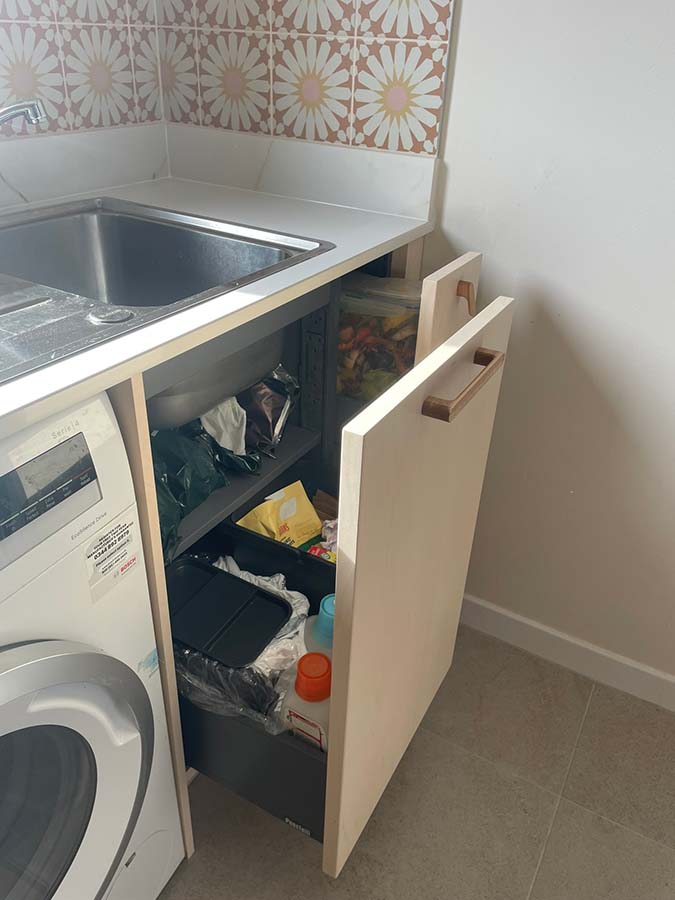
The fridge is now fully integrated. In fact, the only appliance that isn't is the washing machine. .
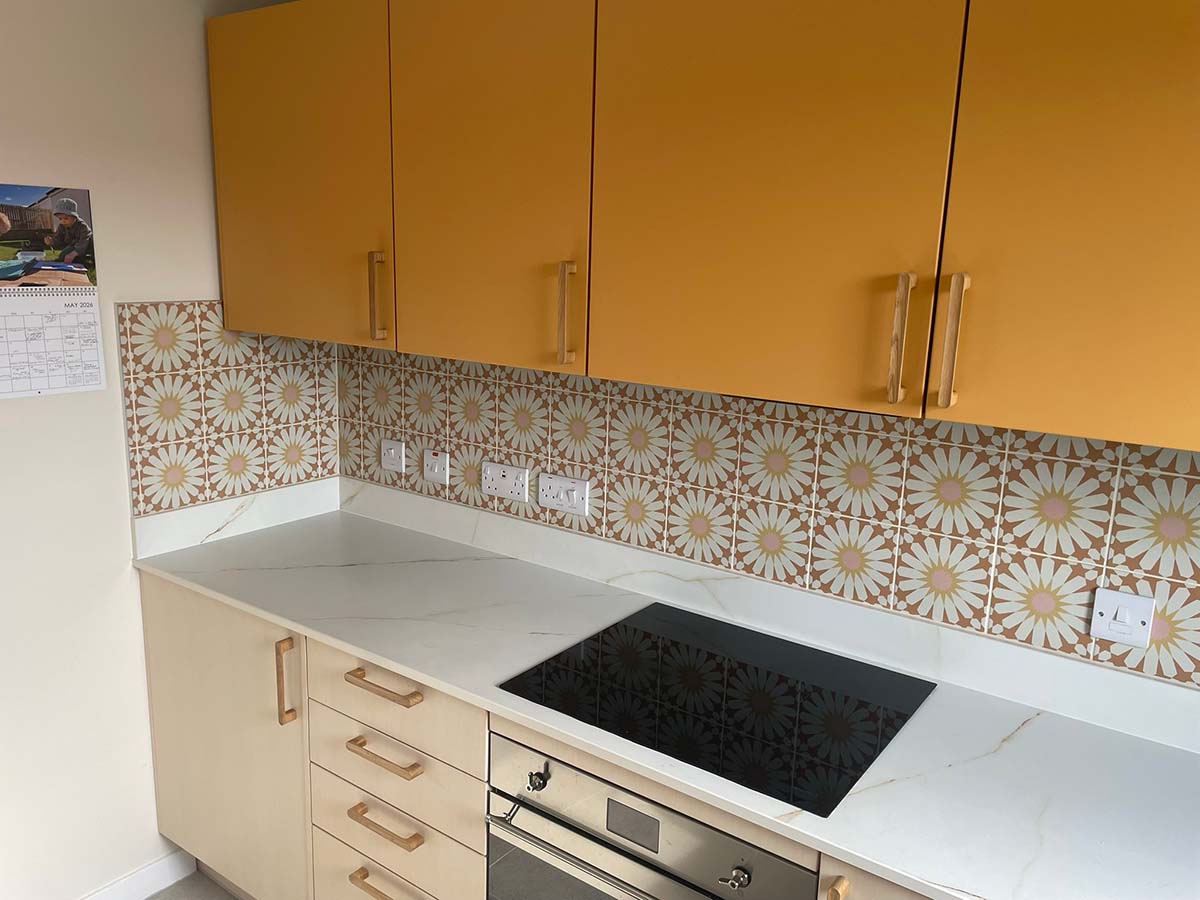
And then there are the wall units. All are now 330mm deep, meaning they can accommodate standard dinner plates. A small, but important detail.
It goes without saying that all hinges and drawer runners are soft-close.
Storage space has increased, along with functionality.
Cabinetry Materials
The homeowner sought an aesthetic that was light, as well as colourful. The final choice was lacquered birch veneer fronts for the base units and painted birch fronts for the wall units. The choice of tiles extended the colour scheme. The chosen handles are the Viefe LUV WOOD made from oak. The grey version of the Puustelli Smartframe was chosen for the internal cabinetry finish.

Birch Veneer Painted Saffron
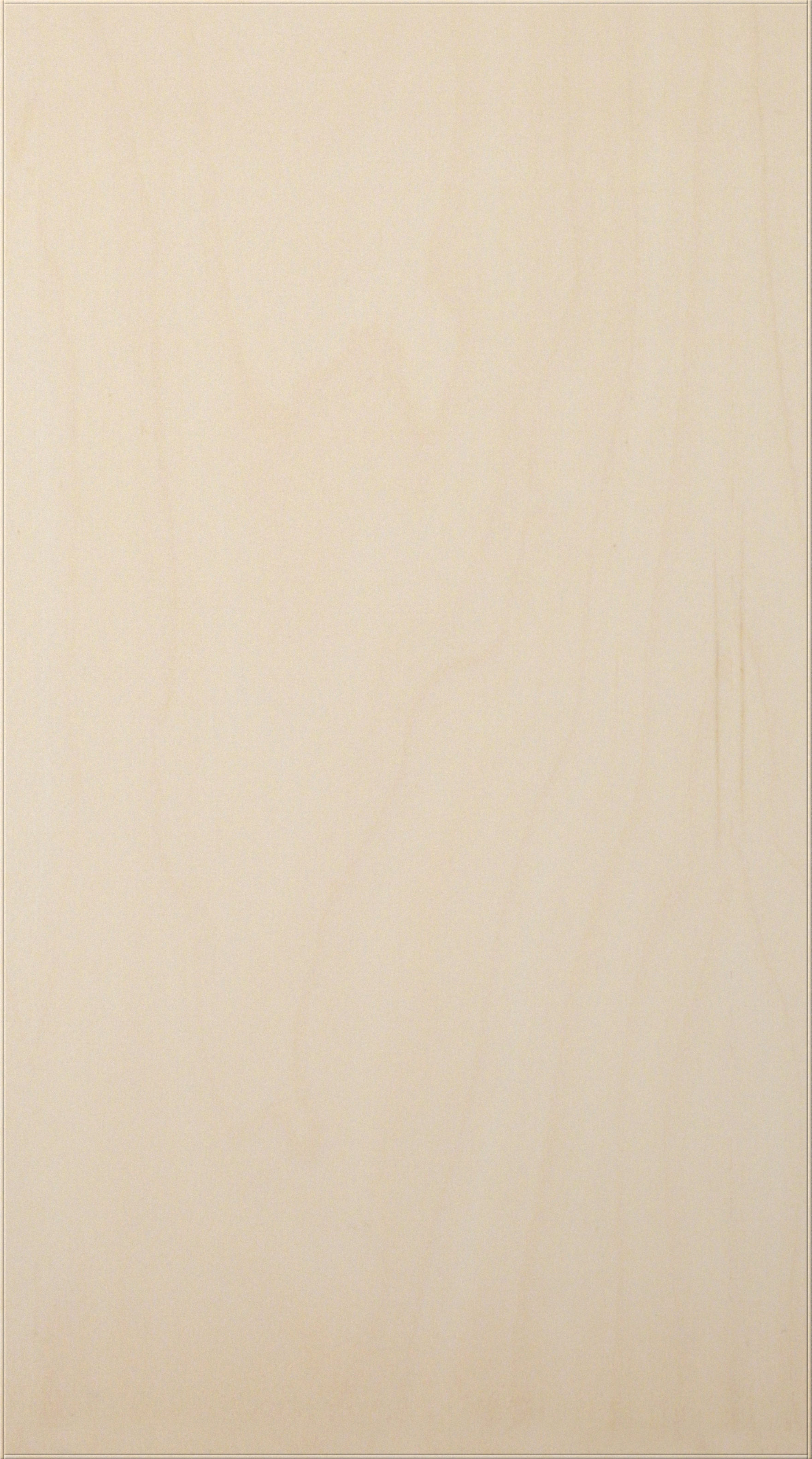
Birch Veneer Lacquered
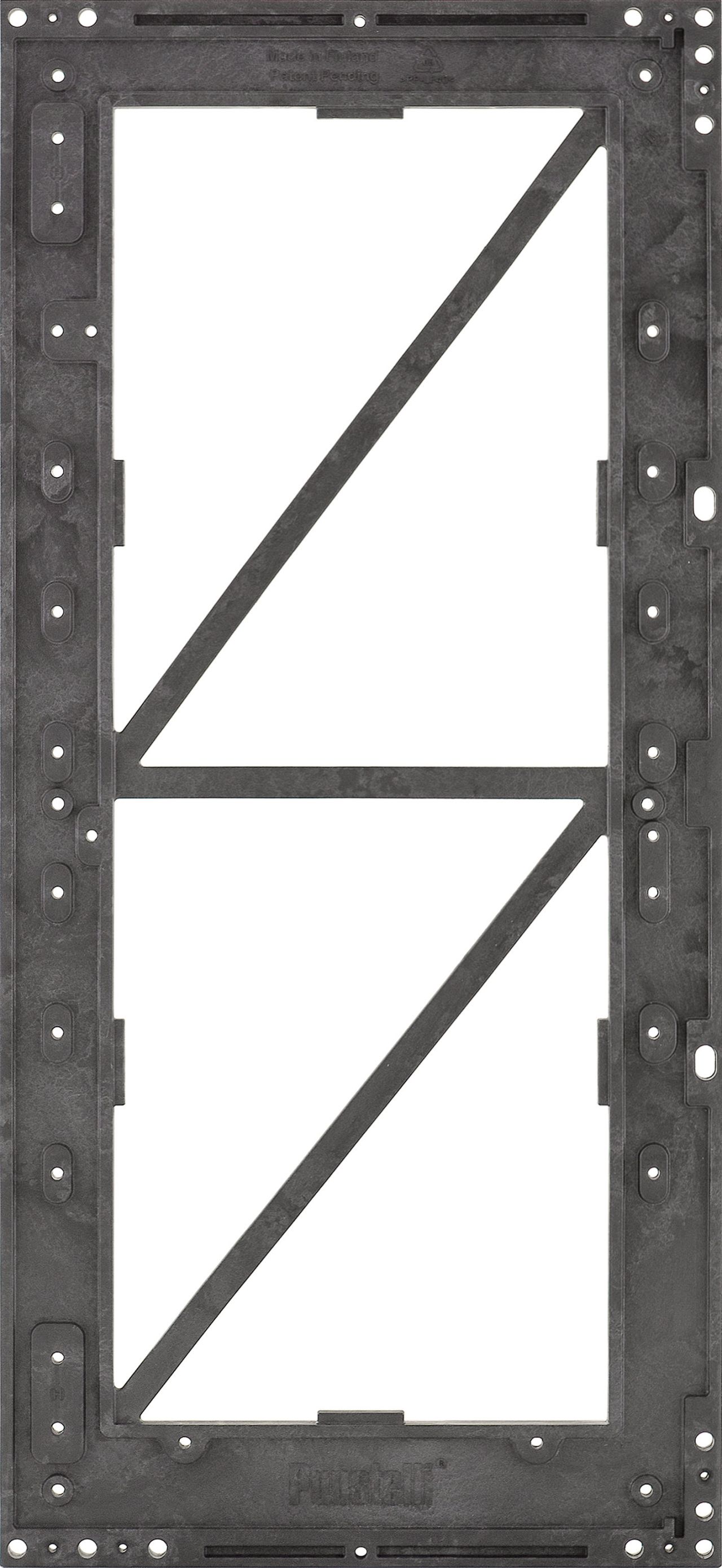
Grey Smartframetm
Appliances
The single oven has been replaced by a compact oven, with microwave and grilling functions. This makes the counter-top microwave and toaster redundant, freeing worktop space.The compact nature of the oven has also allowed for a full pan drawer to be accommodated under the appliance, adding further storage.
The hob is now induction, which optimises power consumption, by only using the energy needed to heat the pan itself. It's also faster than gas, taking only a minute to boil a pint of water. Adding an induction kettle provides a further opportunity to free space on the worktop.
Worktop
The worktop material chosen by the homeowner is porcelain. This was chosen for its performance. It's a material that is tested to 440o so hot items taken off the hob or out of the oven can be placed on it without the risk of damage. Equally, it's a non-porous material which won't stain. It's also highly scratch-resistant.
The specific material is 20mm Laminam Cristallo Gold in the Caress finish, which has a smooth silky touch.

Laminam Cristallo Gold Caress
Project Type
Project Priorities
Space Type
Range
Style
Materials
Interested in talking about Miinus?
Schedule a FREE design consultation today and let's see how Miinus fits with your project.
Consultations are up to 45 minutes and are conducted via video call using Zoom, Google Meet, or Teams. These are relaxed meetings that are designed to allow you to understand how Miinus fits with you.